The pool edge represents one of the most critical elements in the design of modern swimming pool systems, both in residential and professional contexts. Its function is not limited to the aesthetic definition of the pool perimeter, but also involves structural, functional, and safety aspects.
In particular, the design of pool edges directly impacts three key factors: surface water management, slip prevention, and the durability of materials exposed to aggressive environmental conditions.
In recent years, technological advancements in materials and construction systems have led to greater integration between pool edges and drainage systems, making pool gratings an essential design element rather than a secondary accessory.
Technical function of the pool edge in modern design
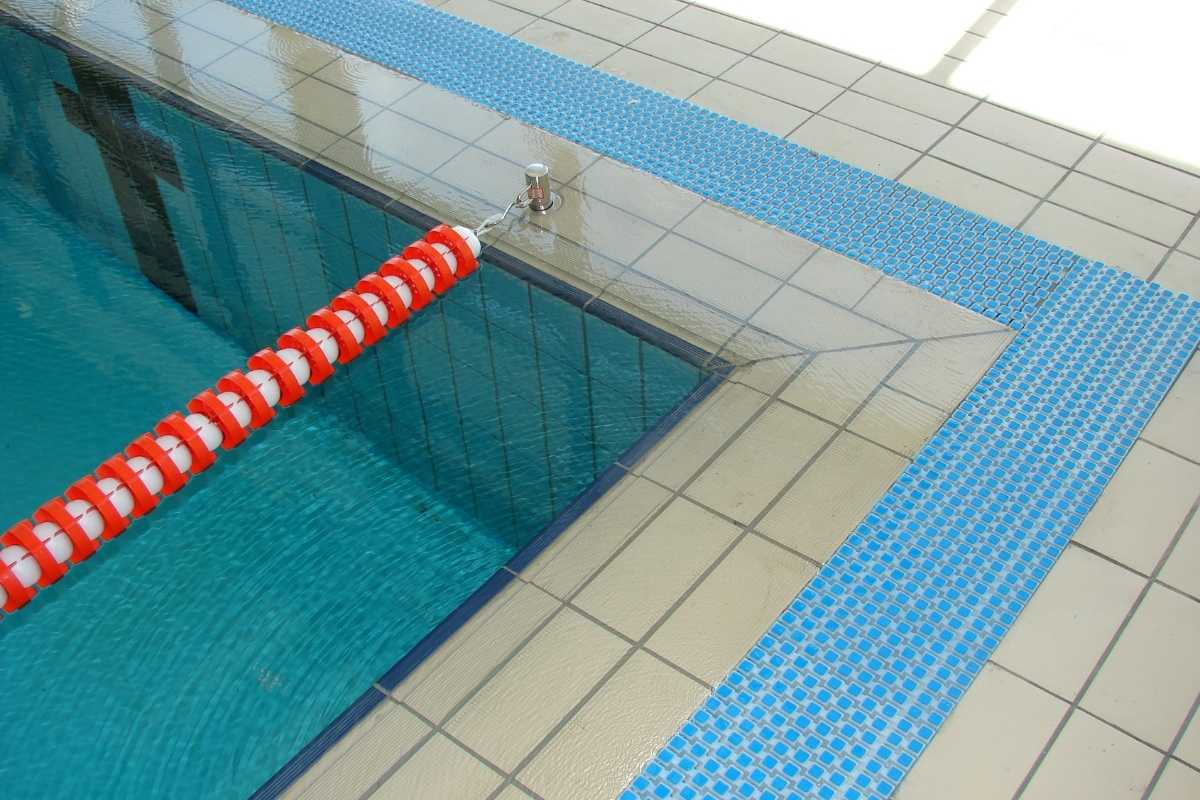
The pool edge is the transition area between the pool and the pedestrian zone. This area is subject to continuous stress conditions: constant presence of water, exposure to chemicals (chlorine and treatments), UV radiation, and thermal fluctuations.
From an engineering perspective, the edge must ensure long-term dimensional stability, resistance to thermal expansion, controlled anti-slip surface, compatibility with water drainage systems, and chemical resistance to pool treatments.
An error in pool edge design can lead to recurring issues such as infiltration, material detachment, algae formation, or dangerous water stagnation.
For this reason, modern pool edge design is increasingly approached as an integrated system rather than a single architectural element.
Types of pool edges: materials and performance analysis
The choice of material for the pool edge is a crucial step that determines performance, maintenance, and durability of the entire system.
Let’s start with porcelain stoneware pool edges, which currently represent one of the most widely used solutions in contemporary projects thanks to their high resistance and aesthetic versatility.
From a technical standpoint, porcelain stoneware is characterized by very low porosity (almost zero absorption), high freeze-thaw resistance, good flexural strength, long-term color stability, and a wide range of anti-slip finishes.
However, the rigidity of the material requires extremely precise installation and proper slope design toward drainage systems to prevent water accumulation along the pool edge.
Another option is natural stone pool edges, often used in high-end aesthetic contexts. Granite, travertine, and engineered stones are among the most common solutions.
From a technical perspective, natural stone offers high thermal inertia, strong natural aesthetic appeal, and good mechanical resistance (depending on the type). However, it may present issues related to porosity and long-term maintenance, especially in environments with high chlorine or saltwater exposure.
Finally, there are pool edges made of plastic and technical materials, which are becoming increasingly common in engineering and professional applications.
These systems are characterized by high modularity, lightweight structure, resistance to chemical corrosion, ease of installation, and compatibility with prefabricated systems.
Technical plastics (particularly high-performance polymers) also allow greater design flexibility in managing geometries and integrating with drainage systems.
Water management and safety: the role of pool gratings
One of the most critical aspects in pool edge design is surface water management.
During pool use, large quantities of water are continuously displaced into the surrounding area. Without an adequate drainage system, this water tends to stagnate, creating hazardous and degrading conditions.
Pool gratings perform a fundamental technical function in this context:
- collecting surface water along the pool edge
- channeling it into drainage systems
- reducing surface slipperiness
- preventing biofilm and algae formation
- protecting pool edge materials
From a design perspective, the drainage system must be sized according to pool surface area, usage frequency, and climatic conditions.
Inefficient drainage is one of the main causes of premature deterioration of surrounding surfaces.
Nexus pool gratings: bimaterial technology and engineering approach
Nexus pool gratings are designed to meet the needs of high-use environments such as public pools, hotels, spas, and sports facilities, as well as high-end residential applications.
Their key distinguishing feature is patented bimaterial technology, which allows the combination of two different materials in a single industrial molding process.
This approach completely eliminates mechanical joints, structural adhesives, and material discontinuities.
From a technical standpoint, this results in significant improvements in mechanical fatigue resistance, durability in humid environments, chemical resistance, and structural stability under repeated loads.
The material combinations are designed to meet different functional requirements:
- Twin Gres: designed to integrate with porcelain stoneware surfaces, ensuring aesthetic continuity between pool edge and flooring.
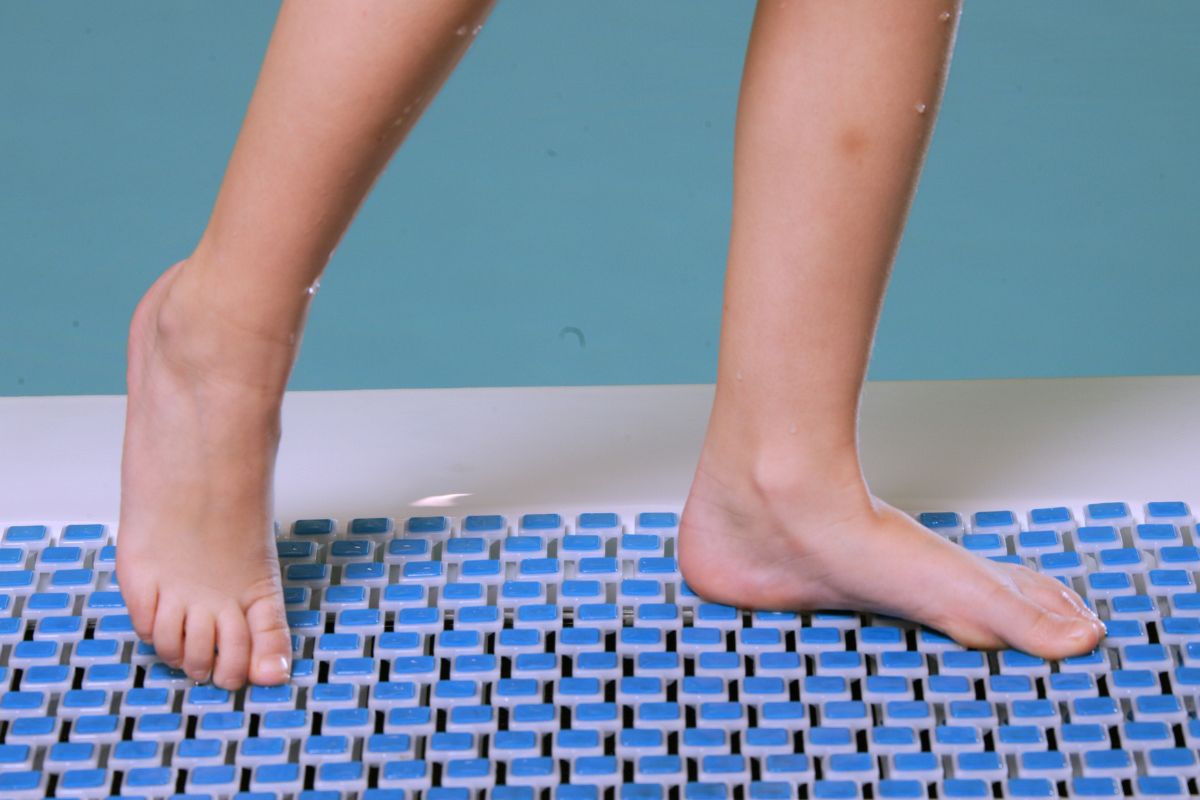
- Twin plastic/rubber: optimized for maximum anti-slip safety, ideal for high-traffic or public environments.
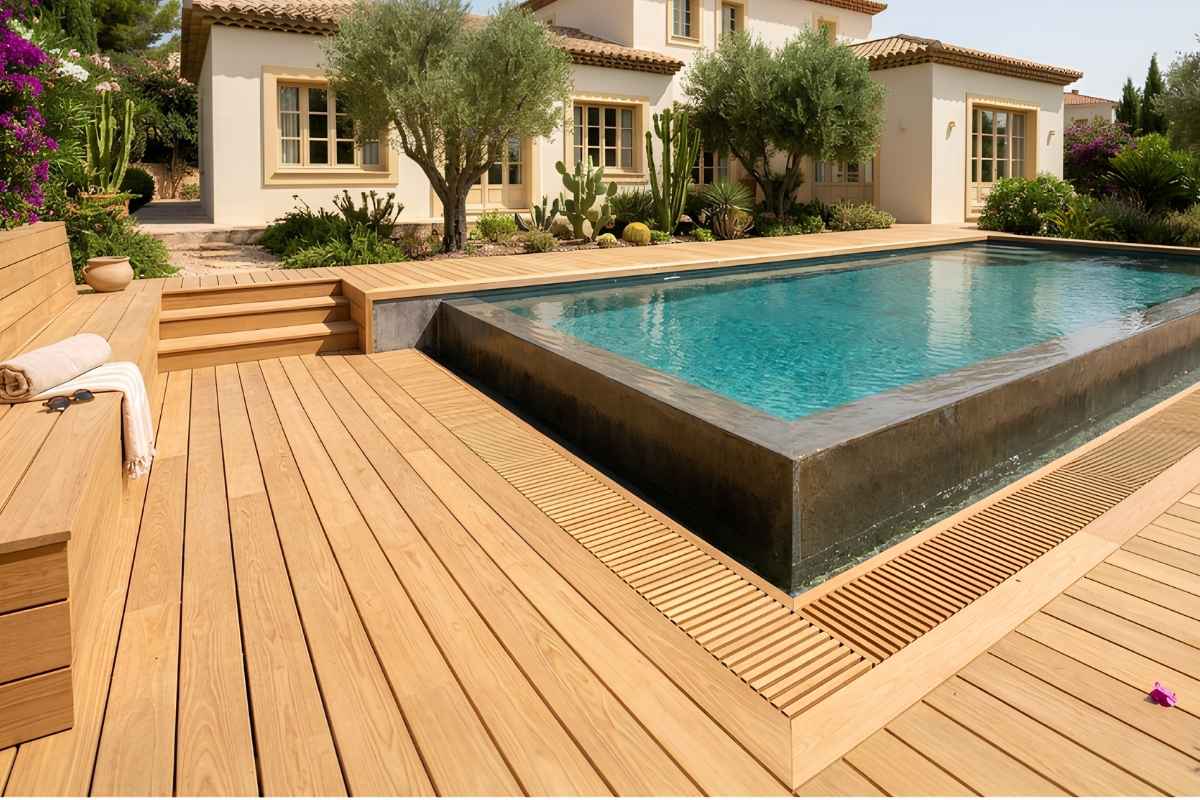
- Twin plastic/teak wood: a solution that combines technical performance with natural aesthetics, widely used in wellness and hospitality contexts.
- Mono Twin plastic: a high-resistance technical version designed for applications where functionality and low maintenance are the priority.
From an engineering perspective, the absence of joints represents a key advantage in reducing typical failure points of traditional systems.
Integration between pool edge and drainage systems: modern design approach
Modern pool design requires a systemic approach that considers the pool edge and drainage system as interdependent elements.
It is no longer sufficient to design separate surfaces: functional continuity between edge and grating is essential to ensure optimal performance. An integrated system allows uniform water flow control, reduces localized stagnation risks, improves user safety, increases material lifespan, and reduces maintenance interventions.
In professional projects, the edge-grating system is already dimensioned during the early stages of architectural design.
Evolution of pool edges: from aesthetic element to technical system
Historically, the pool edge was considered a purely aesthetic element. However, evolving safety regulations and user expectations have transformed it into a complex technical system.
Today, key design factors have shifted, with priority given to:
- certified anti-slip safety
- surface water hydraulic management
- compatibility with prefabricated systems
- durability in chemically aggressive environments
- material sustainability and reduced maintenance
This evolution has led to an increasingly strong integration between pool edge materials and advanced drainage systems.
FAQ - Pool edge
- What is the function of a pool edge?
The pool edge defines the perimeter area of the pool and contributes to safety and surface water management. - What materials are most commonly used for pool edges?
Porcelain stoneware, natural stone, and technical plastics are the main materials used in modern design. - Why are pool gratings important?
They prevent water stagnation, improve safety, and protect pool edge materials. - Are Nexus gratings suitable for public pools?
Yes, they are designed for high-usage environments such as public facilities, hotels, and spas.
Modern pool edge design requires high-performance integrated solutions. Nexus bimaterial technology gratings provide an advanced technical solution to ensure safety, durability, and efficiency in pool drainage systems. Contact us for information and quotes for your project!