Photovoltaic mounting structures are the fundamental supporting element of any solar system, regardless of the type of installation. Whether for residential, industrial, or commercial systems, the choice of the support system directly affects energy performance, safety, and the durability of the entire installation.
In recent years, the evolution of materials and installation technologies has led to the development of increasingly lightweight, modular, and high-performance solar panel mounting structures. In particular, innovative systems made of technical plastic materials now represent a valid alternative to traditional steel or concrete systems, thanks to their ease of installation, resistance to weather conditions, and reduced logistical impact.
Modern photovoltaic structures are no longer simple static supports, but fully engineered systems designed to optimize the angle of exposure, distribute loads evenly, and ensure stability even under extreme environmental conditions.
Evolution of photovoltaic mounting structures
The first solar panel mounting structures were made almost exclusively of galvanized steel or aluminum, materials that ensured mechanical strength but presented significant limitations in terms of weight, transport, and installation time.
Today, technological advancements have introduced more advanced systems capable of meeting increasingly complex design requirements. Modern support structures for photovoltaic panels must ensure high resistance to wind and static loads, compatibility with different types of roofing, reduction of thermal bridges, ease of installation and maintenance, and material sustainability.
In this context, modular systems made of technical plastic materials are becoming increasingly important, especially for flat roof installations and ground-mounted systems.
Solar panel structures on flat roofs
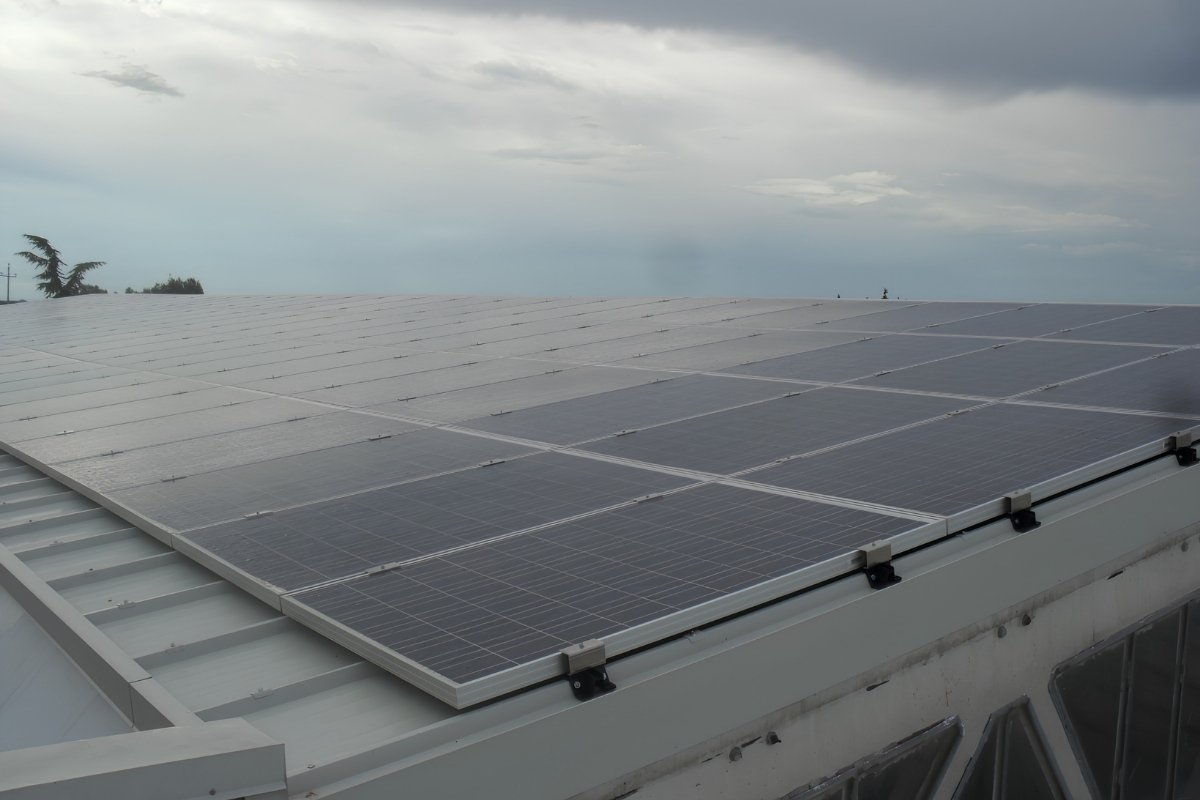
Flat roof photovoltaic systems are among the most common applications in industrial and commercial sectors. In this type of installation, the choice of support structures is particularly critical, as there is no natural roof inclination.
Modern solutions include tilted or ballasted systems that allow:
- optimizing the tilt angle of the modules for maximum energy production
- avoiding perforations of waterproof roofing systems
- proper distribution of static loads
- ensuring wind resistance without compromising the existing structure
Solar panel structures for flat roofs must also be designed to simplify installation, reducing assembly time and costs.
Innovative systems made of technical plastic materials stand out in this field for their lightweight nature, allowing easier handling on-site and significantly reducing the overall load on the roof.
Ground-mounted photovoltaic structures: stability and modularity
Ground-mounted photovoltaic systems require completely different support structures compared to rooftop installations. In this case, the system must ensure structural stability regardless of soil conditions and environmental stresses.
Ground-mounted photovoltaic structures must meet specific engineering requirements:
- resistance to dynamic wind loads
- adaptability to uneven terrain
- possibility of scalable modular configurations
- ease of transport and on-site assembly
- long-term durability with minimal maintenance
High-resistance plastic material solutions represent a significant innovation compared to traditional concrete or metal systems, especially for medium and large-scale installations.
Modularity also allows quick adaptation of the system configuration based on production needs or site characteristics.
Mounting systems and supports for solar panels
Solar panel supports and mounting systems are a critical component of the entire installation, as they connect the photovoltaic modules to the supporting structure.
Modern mounting systems for solar panels are evolving towards lighter and more efficient solutions, capable of reducing the number of metal components and simplifying installation operations.
In this context, technical plastic accessories and hybrid systems provide an effective solution to improve overall system efficiency. Nexus solutions for solar panel mounting structures are based on an innovative approach that uses high-performance technical plastic materials for the production of support systems and mounting accessories.
These systems represent a cost-effective and functional alternative to traditional steel or concrete structures, offering significant advantages in terms of reduced overall system weight, simplified transport logistics, faster installation processes, resistance to corrosion and weather conditions, and lower maintenance costs.
The range includes solutions for various applications:
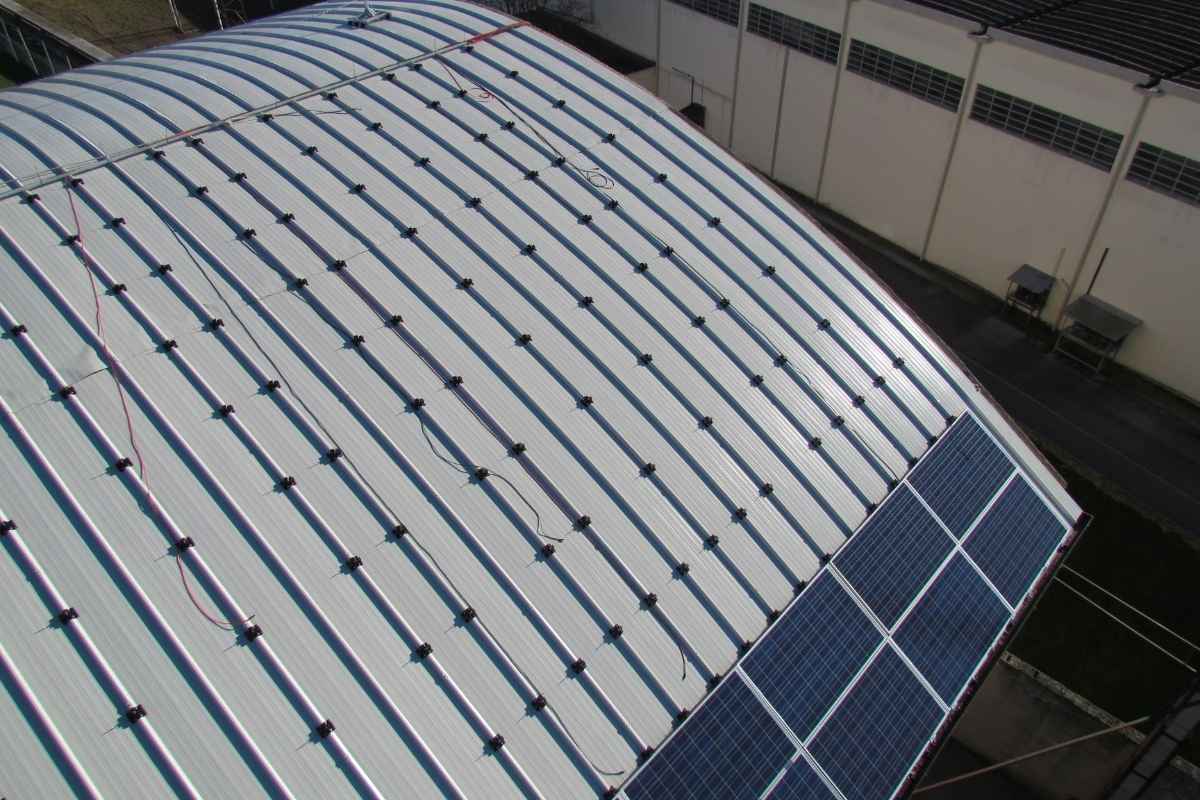
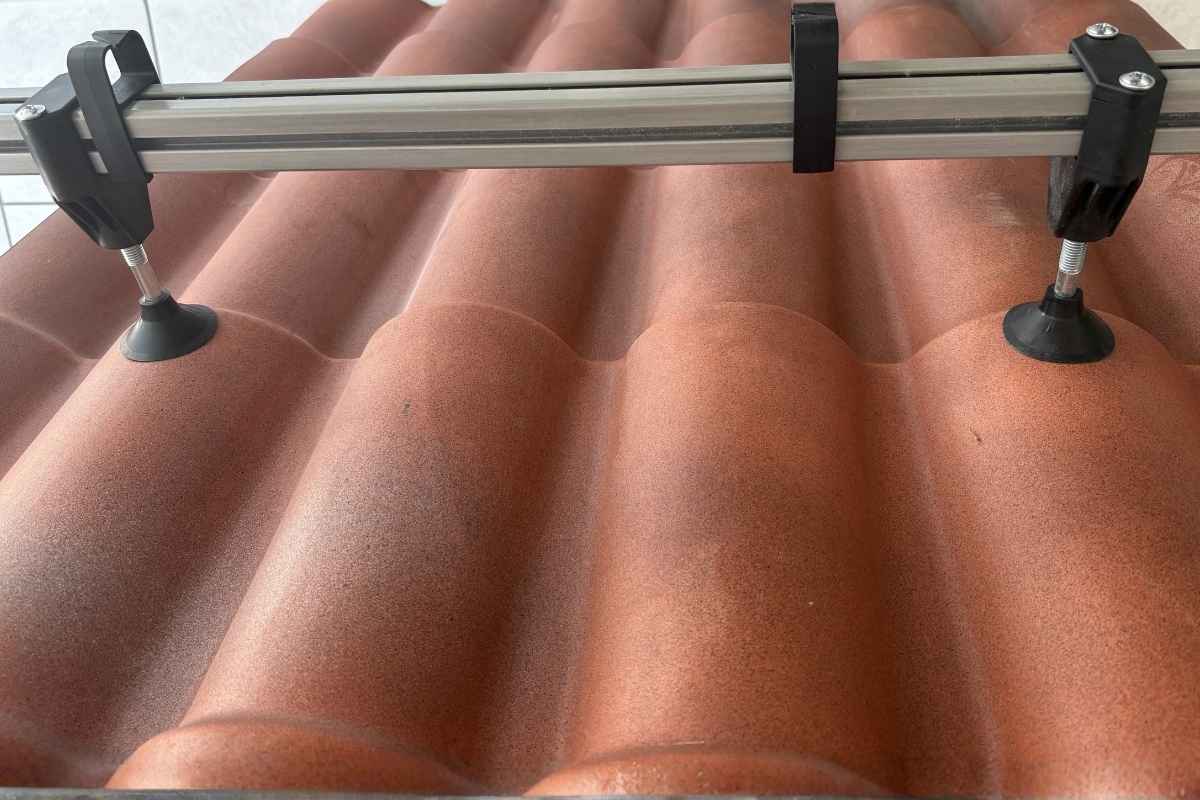
- systems for roofs with tiles or curved tiles
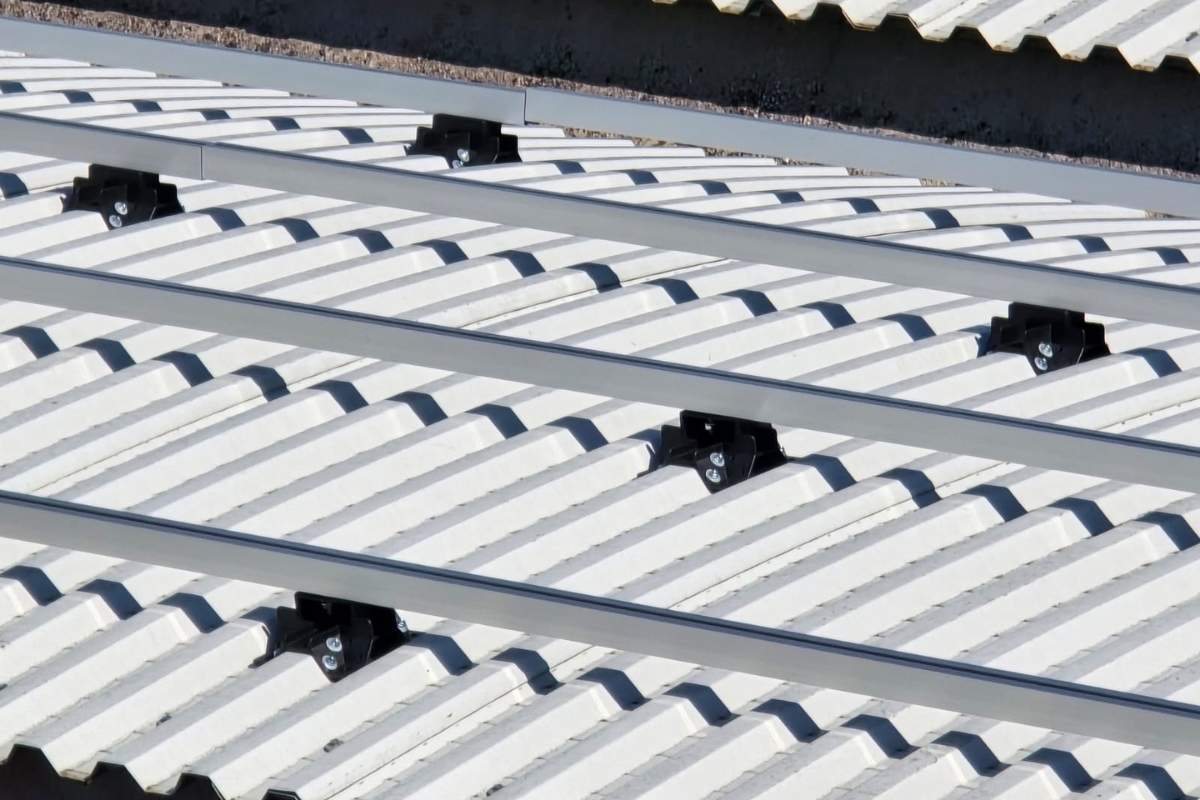
- structures for sandwich panels or corrugated metal sheets
- supports for flat roof installations
- systems for ground-mounted installations
- technical mounting accessories
- components for EV charging stations
Each solution is designed to ensure maximum compatibility and integration in different installation contexts.
FAQ - Photovoltaic structures
- What are photovoltaic mounting structures?
They are support systems used to fix solar panels on roofs or on the ground, ensuring stability and proper exposure. - What materials are most commonly used for photovoltaic structures?
Traditionally steel and aluminum, but today high-performance technical plastic materials are becoming increasingly common. - Are solar panel mounting structures universal?
No, they must be selected based on the type of installation: pitched roof, flat roof, or ground-mounted system. - What are photovoltaic mounting systems?
They are components that connect solar panels to the supporting structure and ensure their stability. - Are plastic structures reliable?
Yes, when designed with high-performance technical materials, they offer strength, lightness, and long-term durability. - What are the advantages of ground-mounted photovoltaic systems?
Greater flexibility in tilt angle, easier maintenance, and suitability for large-scale installations.
Modern photovoltaic mounting structures are therefore a key element in maximizing the efficiency and lifespan of solar systems. Nexus solutions made of technical plastic materials offer an innovative alternative to traditional systems, ensuring lightness, fast installation, and long-term resistance. Discover our complete range of solar panel mounting structures and fixing accessories and optimize your system with solutions designed for professional installers.