In modern stormwater management and wastewater systems, plastic inspection chambers represent one of the most important technical elements for ensuring the proper functioning of drainage networks and hydraulic infrastructures. Used in urban, residential, industrial and infrastructure contexts, inspection chambers make it possible to collect, channel and distribute water flows within drainage networks, ensuring efficiency, safety and ease of maintenance.
Within a drainage system, the inspection chamber performs a connecting function between different pipes, allowing inspection and management of rainwater or wastewater. Together with plastic manhole covers, grates and lids, these elements form key nodes in water collection and channeling networks.
Traditionally, these structures were made of concrete. However, the evolution of materials and production technologies has led to the spread of more innovative and efficient solutions such as plastic inspection chambers, designed to offer greater lightness, chemical resistance and ease of installation compared to the traditional concrete manhole.
Today, for these and other reasons, plastic inspection chambers represent an increasingly common choice among designers, construction companies and hydraulic system installers, thanks to their ability to guarantee high performance and long operational life even in complex environmental conditions.
The role of inspection chambers in the water collection network
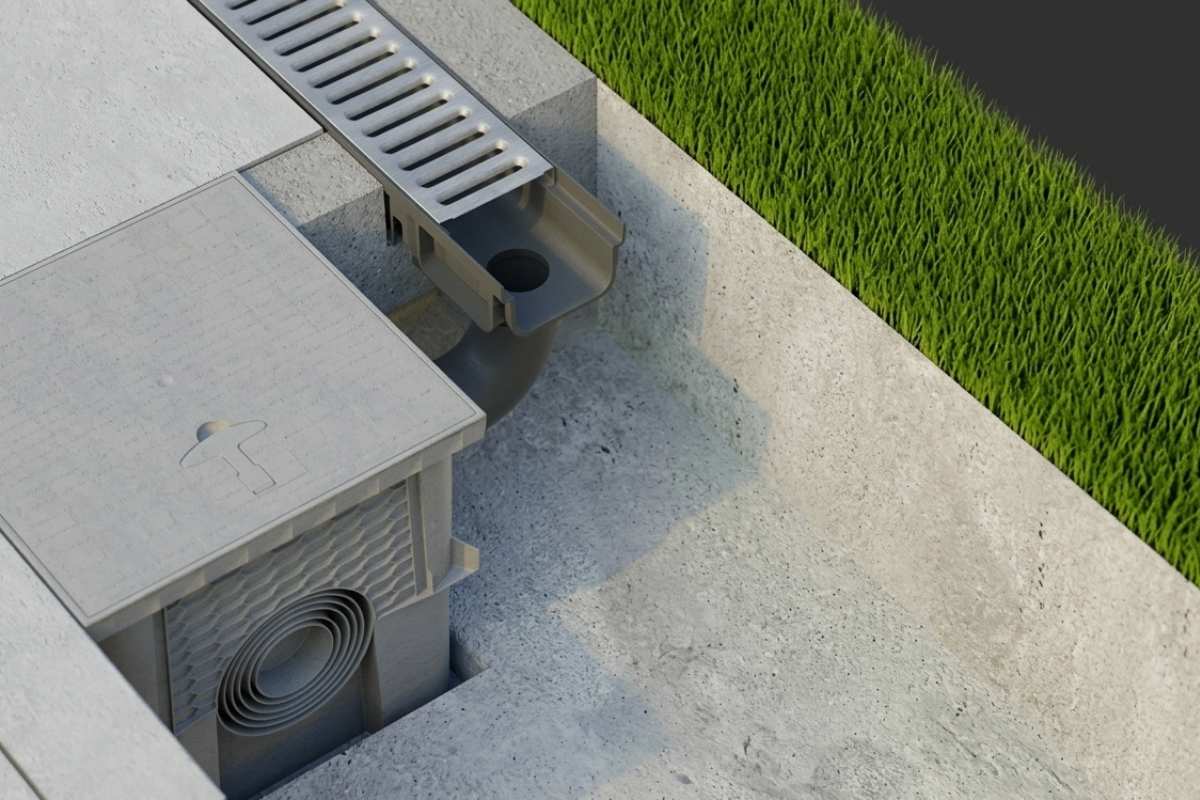
In any drainage or sewer system, the sewer inspection chamber plays an essential role in managing and distributing water flows. It is an underground structure designed to collect water coming from draining surfaces, grates or catch basins and channel it towards the main pipelines of the network.
Inspection chambers are installed at strategic points of hydraulic infrastructure, such as pipe intersections, near changes in pipeline direction, at stormwater collection points, or in areas subject to maintenance and inspection.
Thanks to their function as network nodes, plastic inspection chambers allow water flow to be managed efficiently, preventing stagnation, clogging or pipe overloading.
A sewer inspection chamber can also perform several additional important functions, including:
- facilitating network maintenance and inspection operations
- separating sediments and debris carried by water
- distributing flow to multiple pipelines
- ensuring continuity of the drainage system
Combined with plastic manhole covers, grates and lids, inspection chambers enable the creation of efficient and durable water collection systems. These elements therefore represent essential components for the proper functioning of urban infrastructures and hydraulic systems.
Plastic inspection chambers: technical advantages compared to traditional materials
In recent years, plastic inspection chambers have progressively replaced many traditional solutions made of concrete. The main reason for this evolution lies in the technical characteristics of modern plastic materials, which offer numerous advantages in terms of performance, durability and ease of installation.
A plastic inspection chamber is generally produced using technical materials such as polypropylene (PP) or high-density polyethylene (HDPE), materials that guarantee high mechanical resistance and long-term stability.
Compared to the traditional concrete manhole, plastic inspection chambers offer several operational advantages.
First of all, greater lightness: as expected, plastic inspection chambers are significantly lighter than concrete structures. This reduces transport costs, simplifies handling on site and speeds up installation operations.
Another key factor is chemical and environmental resistance: sewer networks and drainage systems are often exposed to aggressive substances and difficult environmental conditions. Plastic manholes and inspection chambers made of technical polymers guarantee greater corrosion resistance compared to concrete structures.
Thanks to their structure and material stability, plastic inspection chambers maintain their mechanical characteristics over time without experiencing degradation, cracking or erosion. Their reduced weight and modular structure also allow simpler and faster installation compared to traditional systems.
Finally, they allow greater design versatility: many plastic inspection chamber models are equipped with pre-arranged pipe connections, enabling a flexible configuration of the drainage network.
These characteristics make such drainage solutions particularly efficient for the construction of modern hydraulic infrastructures, helping improve the overall performance of water collection systems.
Nexus plastic inspection chambers for efficient drainage systems
Designed to offer high performance and ease of installation, Nexus plastic inspection chambers are made of polypropylene (PP), a material that guarantees excellent mechanical resistance, dimensional stability and long operational life.
Thanks to the properties of polypropylene, these plastic inspection chambers are particularly resistant to chemical agents, temperature fluctuations and the stresses typical of drainage infrastructures.
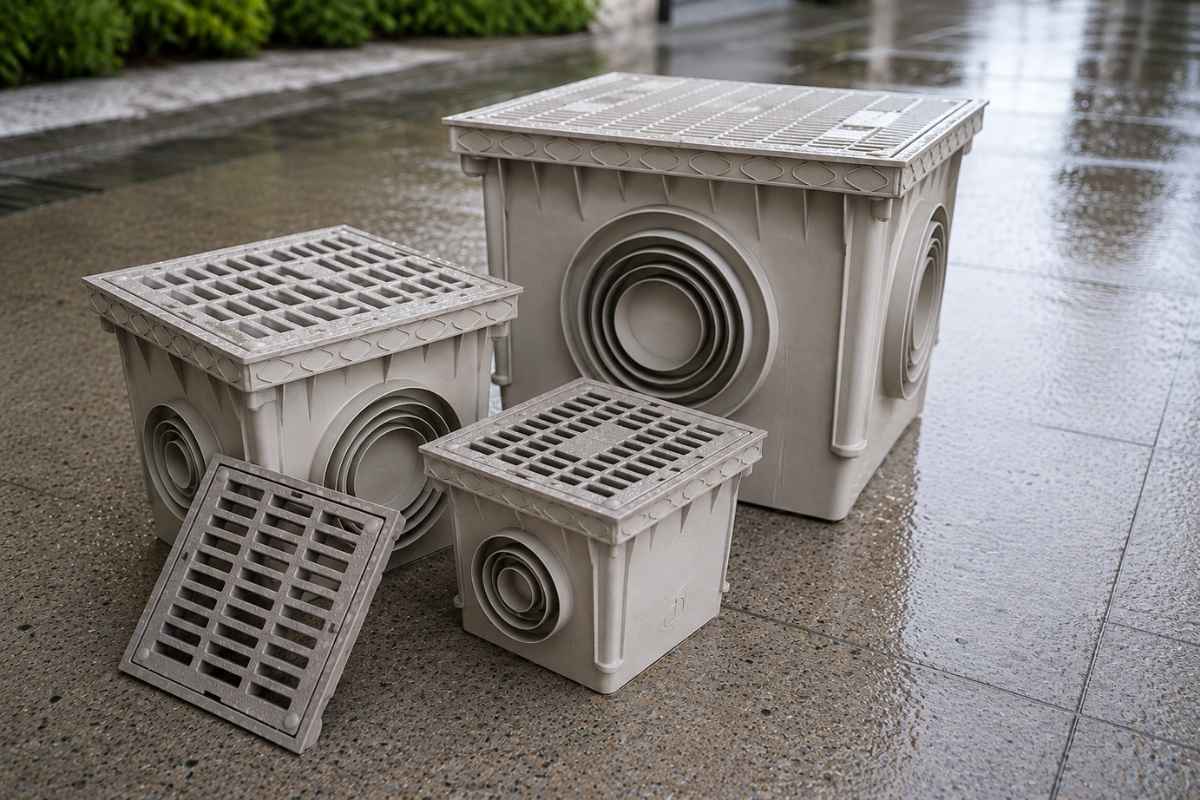
One of the distinctive aspects of Nexus systems is their design focused on practicality. Nexus inspection chambers are lightweight and easy to transport; stackable to optimize storage; and simple to install on site.
From a functional standpoint, these polypropylene inspection chambers offer great configuration flexibility thanks to multiple inlet and outlet connections for pipes. This feature allows the sewer inspection chamber to be easily adapted to different drainage network layouts.
Nexus systems are also compatible with plastic manhole covers, lids and grates designed to guarantee stability, safety and ease of maintenance. Integrated fixing systems allow lids to be securely anchored to the chamber, preventing accidental lifting and improving system safety.
Another technical feature concerns the internal provision for the installation of a siphon plate, which prevents odors from rising from the drainage network. This solution makes plastic inspection chambers particularly suitable for residential and urban environments.
Efficient drainage systems: choosing the right plastic inspection chambers
The choice of components for a drainage system directly affects the performance and durability of the entire hydraulic infrastructure. In this context, plastic inspection chambers represent today one of the most advanced solutions for managing stormwater and wastewater.
Thanks to their lightness, resistance and design versatility, they allow the creation of reliable drainage networks while reducing installation times and maintenance costs. The use of compatible plastic manhole covers, grates and lids also makes it possible to build complete and perfectly integrated systems.
For this reason, more and more professionals in the sector choose plastic inspection chambers for the construction of modern, efficient and long-lasting drainage systems.
If you would like to learn more about the available solutions or identify the inspection chamber best suited to your project, discover the complete range of Nexus plastic inspection chambers, grates and lids and contact our technical team to receive support in choosing the most suitable system for your needs.