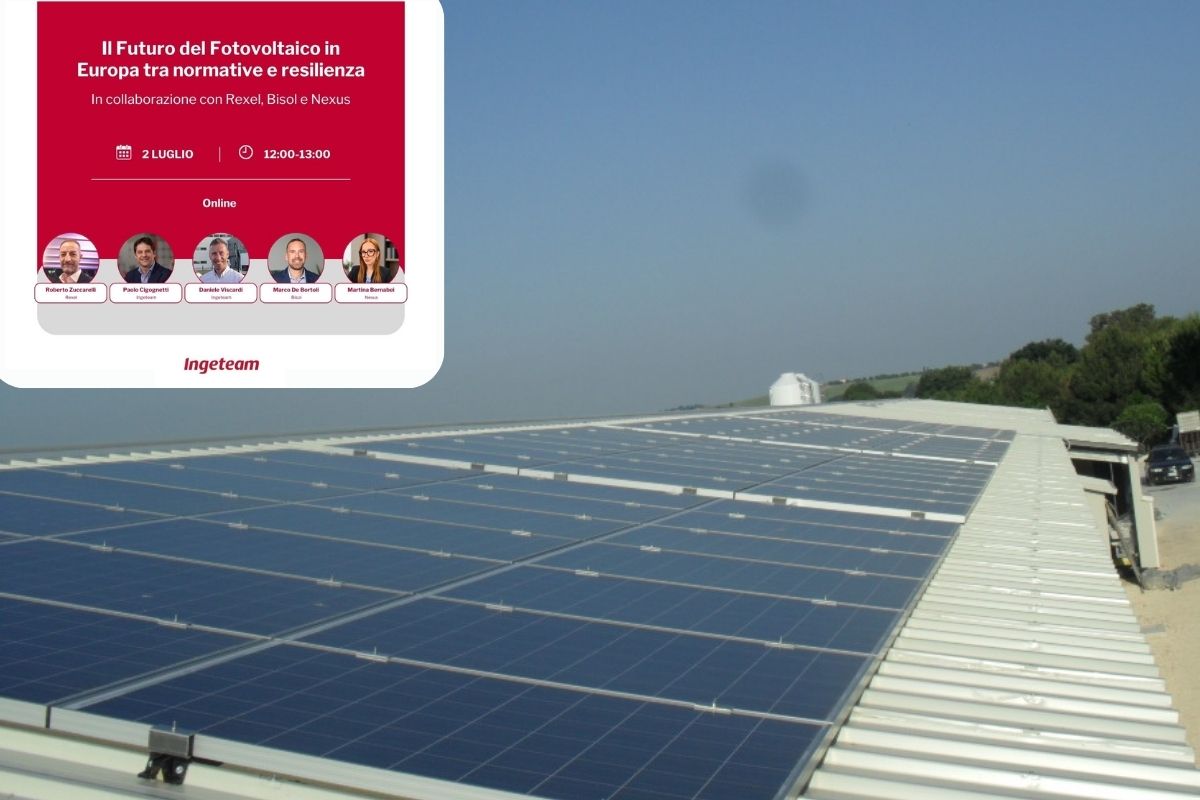
A solar panel mounting bracket is a fundamental component of the mounting system, as it must ensure a stable connection between the panel and the roof, adapting to the characteristics of the roof and the installation requirements. Choosing the right solution therefore depends on the type of roof, the system configuration and the components used to complete the mounting system.
Nexus offers a range of solar panel mounting brackets designed for different applications, from sandwich panel and corrugated sheet metal roofs to roofs with clay or concrete tiles. Alongside traditional stainless steel solutions, the range includes glass-fibre-reinforced nylon brackets, designed to reduce weight and bulk while simplifying installation operations.
How to choose solar panel mounting brackets according to the roof type
There is no universal mounting bracket suitable for every photovoltaic system. The first element to consider is the type of roof on which the panels are to be installed. A corrugated sheet metal or sandwich panel roof has very different characteristics from a traditional roof with clay or concrete tiles and therefore requires specific mounting systems.
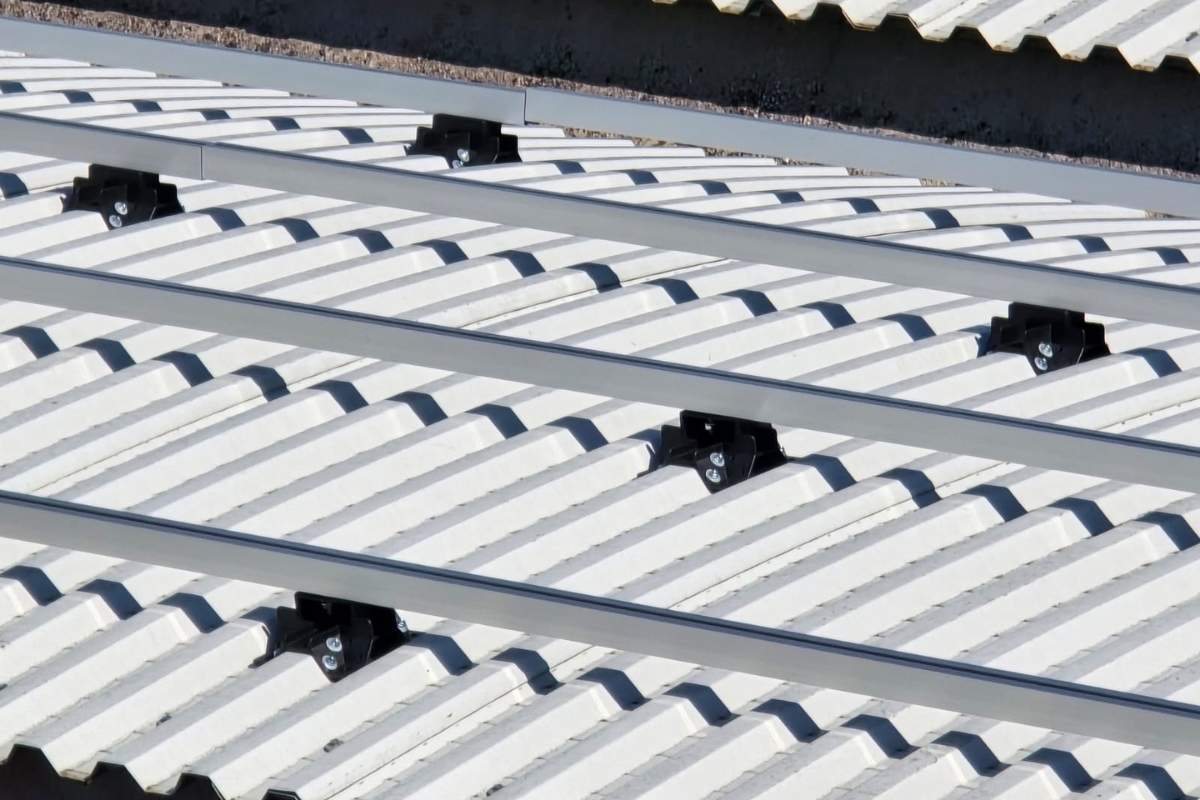
For systems installed on sandwich panels and corrugated sheet metal, Nexus offers several configurations of plastic mounting brackets, identified as Models A, B, C, D, E and F. The availability of different geometries makes it possible to identify the solution best suited to the system configuration and the mounting system provided.
The solar mounting brackets are made of 30% glass-fibre-reinforced nylon, a technical material that makes it possible to obtain resistant components while keeping their weight low. This feature can make components easier to handle and manage directly on site.
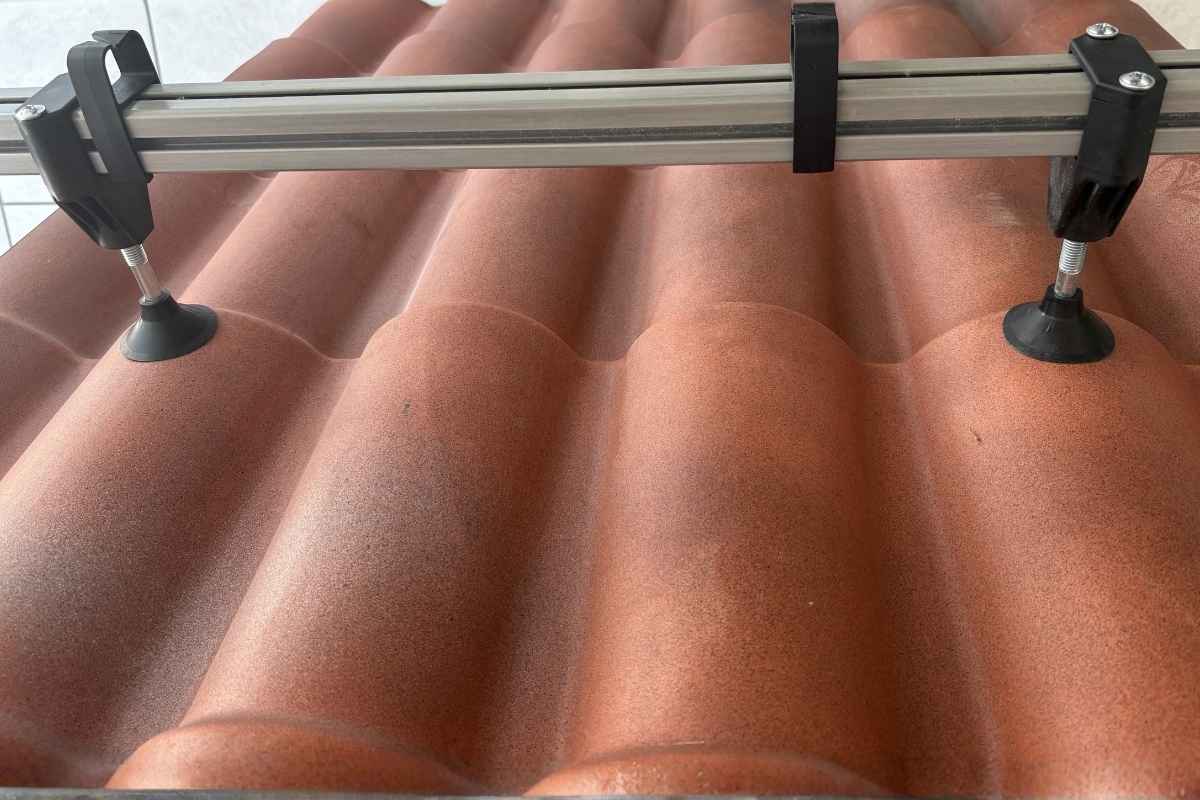
For roofs with clay or concrete tiles, on the other hand, Nexus offers the Model G stainless steel bracket, developed for mounting photovoltaic panels on traditional residential roofs. In this case, the bracket is used in combination with the Nexus plastic extruded profile, creating a system specifically designed for this type of installation.
The distinction between the different applications is therefore the first step in identifying the correct component: the mounting bracket must be selected according to the roof type and integrated with the other elements that make up the mounting system.
Plastic solar mounting brackets: why use glass-fibre-reinforced nylon
The use of technical plastic materials in solar panel mounting brackets represents an alternative approach to traditional metal components. In Nexus solutions designed for sandwich panels and corrugated sheet metal, the material used is 30% glass-fibre-reinforced nylon.
One of the most interesting features is the reduced weight. A lighter bracket is easier to transport, handle and position during installation. This aspect becomes particularly relevant when the number of components to be handled increases, as in larger photovoltaic systems.
The plastic material also helps reduce the component's exposure to corrosion phenomena typically associated with outdoor environments. Another characteristic indicated for Nexus solutions is the lower temperature at the contact point between the bracket and the panel frame compared with a metal solution.
The design of the plastic brackets is also focused on reducing bulk and costs, while maintaining the use of a high-performance technical material. The aim is therefore to develop a component that can be integrated into the photovoltaic system without adding unnecessary weight and complexity.
To properly complete the installation, Nexus brackets for sandwich panels and corrugated sheet metal are designed to be used together with the plastic end and intermediate plates available in the range. Coordinated selection of the components makes it possible to build a mounting system consistent with the panel and roof configuration.
Solar Mounting Bracket Models A, B, C, D, E and F: a range for different configurations
The availability of different models is particularly important when dealing with mounting systems for photovoltaic panels. Installation conditions can vary significantly from one system to another and may require different geometries.
Nexus therefore offers an extensive range of Models A, B, C, D, E and F mounting brackets, all designed for systems installed on sandwich panels or corrugated sheet metal and, in their respective configurations, made of 30% glass-fibre-reinforced nylon.
The possibility of choosing between different shapes makes it possible to adapt the system to the characteristics of the installation rather than relying on a single standard component. The range also includes the Reduced Model E Bracket, with slider and rail, in V0 version, made of 30% glass-fibre-reinforced nylon V0.
This range of options is particularly useful for installers and those involved in system design, as it allows the mounting system to be assessed as a whole. The task is not simply to choose a bracket, but to identify the correct combination of bracket, plates and profiles according to the roof type and panel configuration.
For this reason, when choosing mounting brackets for photovoltaic systems, it is always important to check the component's intended use and its compatibility with the other elements of the system.
Mounting brackets for roofs with clay and concrete tiles: the stainless steel solution
Traditional roofs with clay and concrete tiles require different mounting systems from industrial sheet metal roofs. For these applications, Nexus offers the Model G stainless steel bracket, specifically designed for mounting photovoltaic panels on roofs with clay or concrete tiles.
The use of stainless steel provides a component designed for outdoor use, while the geometry of the bracket is designed to be integrated into the roof structure. The system is recommended in combination with the Nexus plastic extruded profile, completing the connection between the roof and the photovoltaic modules.
This solution is particularly suitable for residential photovoltaic systems on pitched roofs, where the mounting system must be correctly integrated into the existing configuration while meeting installation requirements.
Here too, the choice of bracket should not be separated from an assessment of the system as a whole. The roof, profile, panels and mounting components must be considered as parts of a single design solution.
FAQ – Solar panel mounting brackets
- What are solar panel mounting brackets used for?
Mounting brackets are components of the mounting system that connect photovoltaic panels to the roof, contributing to the stability of the installation. - Which bracket should be used for photovoltaic panels on corrugated sheet metal?
For systems installed on corrugated sheet metal, Nexus offers several models of brackets made of 30% glass-fibre-reinforced nylon, to be selected according to the installation configuration. - Which bracket should be used for sandwich panels?
Nexus offers several models specifically designed for systems installed on sandwich panels, including Models A, B, C, D, E and F brackets. - Are there plastic mounting brackets for photovoltaic panels?
Yes. Nexus offers brackets made of 30% glass-fibre-reinforced nylon, designed for applications on sandwich panels and corrugated sheet metal. - What are the advantages of Nexus plastic mounting brackets?
The features indicated by Nexus include light weight, minimal bulk, reduced exposure to corrosion, lower temperature at the contact point with the panel frame and reduced costs. - Which bracket should be used on a roof with clay or concrete tiles?
For residential systems on roofs with clay or concrete tiles, Nexus offers the Model G stainless steel bracket, recommended in combination with the Nexus plastic extruded profile. - Do the brackets need to be used with other components?
Yes. For brackets designed for sandwich panels and corrugated sheet metal, Nexus recommends using them together with the plastic end and intermediate plates available in the range. - How do you choose the most suitable solar mounting bracket?
The choice mainly depends on the roof type, the panel configuration and the mounting system provided. For this reason, the bracket and complementary components should be assessed as a single system.
Choosing a solar panel mounting bracket requires considering the characteristics of the roof and the system configuration. Nexus offers technical plastic and stainless steel solutions for different applications, from sandwich panels and corrugated sheet metal to roofs with clay and concrete tiles. Discover Nexus mounting brackets for photovoltaic systems and find the solution best suited to your installation.