The management of rainwater is an increasingly important component in the design of civil, industrial and urban spaces. Impermeable surfaces, intense rainfall events and the need to protect buildings and infrastructure make it essential to design efficient and easily inspectable drainage systems.
Within these systems, rainwater collection chambers play a strategic role: they collect and convey water, facilitate connections between different sections of the network and allow inspection and maintenance operations to be carried out. The choice of the chamber must therefore be assessed in relation to the characteristics of the system, the conditions of use and the specific requirements of the project.
Rainwater management starts with drainage system design
An effective system for rainwater management cannot be improvised. The increasing waterproofing of surfaces, due to the presence of paving, roofs and driveways, reduces the natural ability of the soil to absorb water and increases the amount of surface runoff.
During intense rainfall, this phenomenon can become particularly critical. Water must be collected quickly and directed towards a properly designed drainage network, preventing accumulation and standing water that could compromise the safety of pedestrian areas or encourage infiltration and structural damage.
In this context, the rainwater collection chamber represents one of the functional nodes of the network. Its purpose is to contribute to the collection and conveyance of rainwater, creating a connection point between drainage surfaces and pipes or other components that make up the system.
The design must take into account several factors, including the surface area involved in collection, the expected volume of water, the layout of the area and the characteristics of the drainage network. A properly sized system allows runoff to be managed more effectively and reduces the risk of water accumulating in the lowest points.
The rainwater collection chamber should therefore not be considered as an isolated element. Its operation depends on its integration with the entire drainage system and on the correct design of collection points, grates, pipes and any drainage systems.
From collection point to conveyance: the role of the chamber in the system
The path followed by rainwater within a drainage system involves several components, each of which performs a specific function. External surfaces collect the water, grates allow it to be intercepted and the pipe system conveys it towards the discharge point or the infrastructure provided for water management.
Within this network, the rainwater collection chamber represents a particularly important connection and access point. Its presence makes it possible to organise the system rationally, facilitating connections between different sections of the network and making inspection operations easier.
This feature is particularly important when the drainage system covers large areas or includes several collection points. In these cases, correctly positioned chambers make it possible to structure the network more efficiently and to identify any anomalies or maintenance requirements more easily.
The drainage chamber must therefore also be considered as part of an overall design. The choice of its position, dimensions and configuration must be consistent with the rest of the system, avoiding standard solutions that are applied indiscriminately to every context.
A properly designed drainage system must also provide adequate access to points that may require periodic inspections. Inspectability is in fact essential for maintaining network efficiency over time, especially in systems exposed to leaves, soil, debris or other materials that may be carried by rainwater.
Why choose plastic chambers for water management
The evolution of drainage systems has led to the widespread use of solutions made from technical plastic materials, capable of offering interesting characteristics both during installation and throughout their service life.
Compared with heavier systems, plastic rainwater collection chambers can simplify handling and installation operations. The reduced weight makes it easier to transport components and handle them directly on site, potentially offering advantages in terms of installation times as well.
The material must naturally be selected according to the application and the expected stresses. For this reason, Nexus offers polypropylene solutions developed for drainage, water collection and inspection applications in civil and industrial contexts.
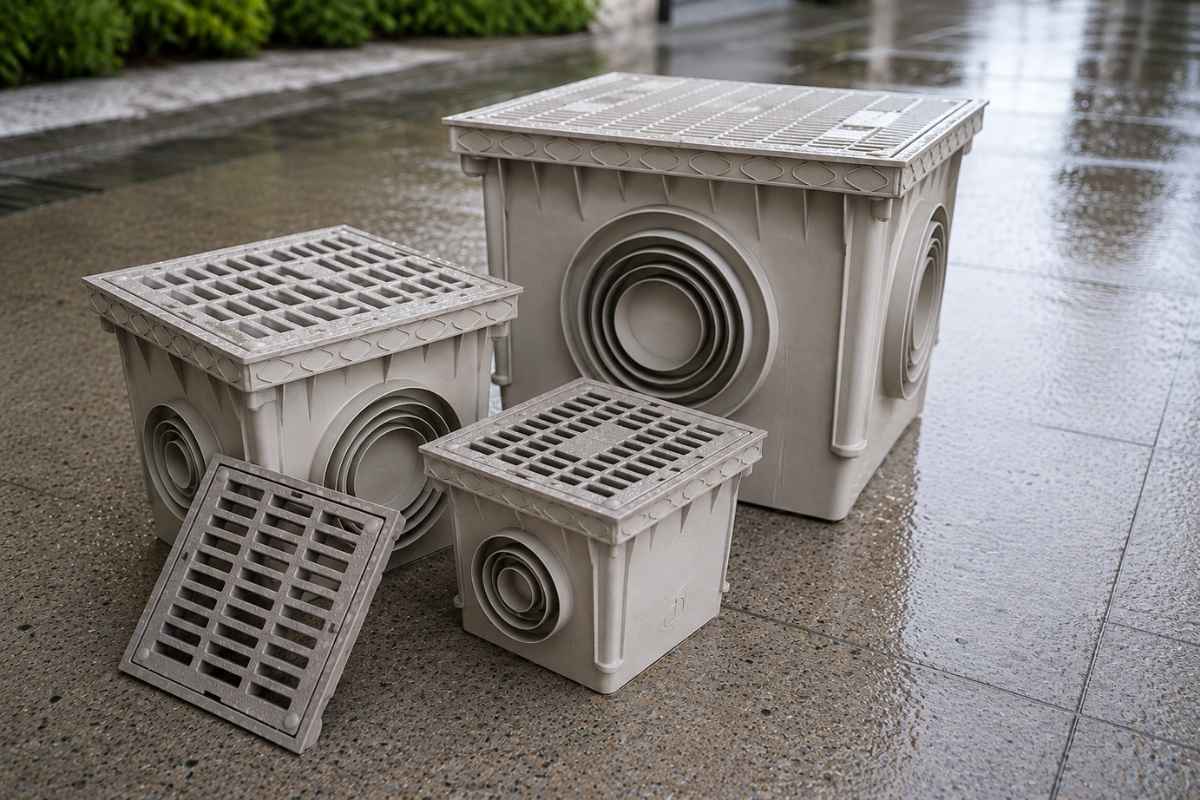
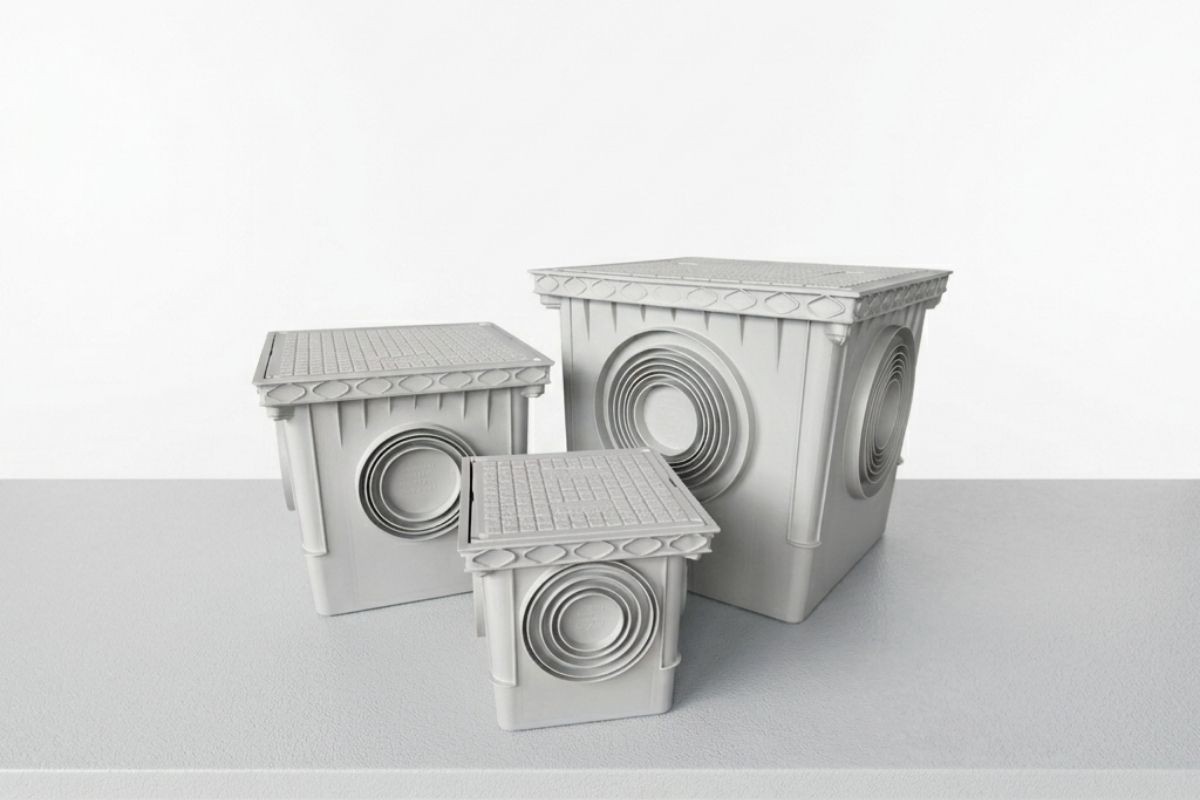
An example is the 20x20 PP chamber, made of polypropylene reinforced with mineral fillers. The product features a lightweight structure, weighing only 0.376 kg, while being designed to ensure stability and durability even under intensive use conditions.
The Nexus range also includes different sizes, with solutions measuring 20x20, 30x30, 40x40 and 55x55 cm, making it possible to identify the configuration best suited to the characteristics of the project.
The choice of plastic material can also be particularly interesting from a logistical perspective. A lighter component is easier to handle, transport and position, aspects that have a concrete impact on construction sites where numerous elements need to be installed.
To complete the system, components such as frames, grates and covers are also available, allowing a more comprehensive solution to be created for different collection, drainage and inspection requirements.
From civil contexts to industrial applications: when the system needs to be designed
Requirements related to rainwater management can vary considerably depending on the context. A residential area, a paved courtyard, a driveway and an industrial site all present very different operating conditions and volumes of water to be managed.
In civil applications, a rainwater collection chamber can be used within systems designed to collect water from external surfaces, paved areas and other spaces subject to rainwater runoff. In these contexts, in addition to drainage efficiency, ease of installation and integration of the system with the surrounding environment can be particularly important.
In industrial applications, on the other hand, the design must take into account more intensive operating conditions and larger surface areas. Component strength, durability and the possibility of carrying out inspections and maintenance operations therefore become central aspects.
There is therefore no single solution that is suitable for every application. The choice of rainwater collection chambers must be part of a broader assessment that considers the collection system, the conveyance network and the characteristics of the area.
The term rainwater drains, often used generically to indicate water collection and access points, can also refer to solutions that differ in terms of characteristics and intended use. For this reason, when selecting components, it is important to distinguish between the different functions performed by the chamber, frame, grate and cover.
Proper design therefore makes it possible to create a more functional network, which is easily accessible for inspection operations and suitable for the requirements of the context in which it is installed.
FAQ – Rainwater collection chambers
- What are rainwater collection chambers used for?
Rainwater collection chambers are components of drainage systems used to collect and convey rainwater and to facilitate the inspection and maintenance of the network. - What is the difference between a rainwater collection chamber and a drainage chamber?
A rainwater collection chamber is generally integrated into the network to collect and manage rainwater, while a drainage chamber may perform a specific connection and conveyance function towards the discharge point provided by the system. - Where are rainwater collection chambers used?
They can be used in a variety of contexts, from residential and civil areas to industrial applications, depending on the characteristics of the drainage system being designed. - Can rainwater collection chambers be made of plastic?
Yes. Technical plastic materials, such as polypropylene, can be used to manufacture chambers intended for rainwater collection, drainage and inspection. - What are the advantages of polypropylene chambers?
The main advantages include light weight, ease of handling and installation, and the possibility of obtaining strong and durable components, depending on the specific formulation and product design. - What sizes of rainwater collection chambers are available?
The Nexus range includes chambers in different sizes, including 20x20, 30x30, 40x40 and 55x55 cm, to meet different project requirements. - Does a rainwater collection chamber require maintenance?
Like any component of a drainage network, the chamber must be accessible for inspection and kept free of debris and materials that could compromise the proper flow of water. - What is the role of grates and covers in drainage systems?
Grates and covers complete the drainage system and allow chambers to be protected and made accessible, with characteristics that must be assessed according to the intended use of the area. - Are rainwater collection chambers also suitable for industrial applications?
Yes, solutions are available for civil and industrial applications. The choice must be made by considering the operating conditions and the specific characteristics of the system.
Designing a system for rainwater management requires reliable, easy-to-install components that are suitable for the characteristics of the system. Rainwater collection chambers are an essential part of the network, contributing to water collection, conveyance and inspection.
Nexus offers a range of polypropylene solutions, including chambers, grates, covers, frames and accessories designed to meet the requirements of different applications. To identify the most suitable rainwater collection chamber for your application and receive more information about Nexus solutions, contact our team.