Installing a photovoltaic system on a roof requires careful planning of every component, starting with the fixing systems. When the roof is made of clay or concrete tiles, it is essential to use supports designed to adapt to the roof structure and ensure stable panel anchoring over time.
Fixing solar panels on roof tiles requires consideration of the characteristics of the roof, the type of tile and the supporting structure, as well as the environmental conditions to which the system will be exposed. An appropriate system allows the modules to be installed safely while preserving the integrity of the roof.
In this article, we explore the key aspects to consider when creating a proper solar panel fixing system on clay and concrete tiles and the solutions that can be used to design a functional and reliable photovoltaic system for tiled roofs.
Solar panel fixing on roof tiles: installation and mounting
Installing a photovoltaic system on a roof covered with clay or concrete tiles presents different challenges compared to installation on other types of roofs. Tiles form the outer layer of the roof and play an important role in protecting the building from the elements. For this reason, the panel anchoring system must be designed to integrate with the existing structure without compromising its functionality.
A system for fixing solar panels on roof tiles must first and foremost guarantee the stability of the modules. Solar panels are continuously exposed to wind, rain, snow, and temperature fluctuations. Environmental stresses can be significant, making it necessary to use a fixing system suited to the specific characteristics of the roof.
At the same time, it is important to consider load distribution. The weight of the modules and support structure must be correctly transferred to the roof and, where required by the installation system, to the load-bearing elements of the roof. Careful planning helps reduce the risk of excessive stress and maintain system stability over the years.
Another important aspect is compatibility with the roof covering. A good fixing system should allow the panels to be installed while maintaining, as far as possible, the continuity and functionality of the tiled roof. For this reason, the choice of support should not be considered separately from the overall photovoltaic system design, but as an integral part of the project.
How to install solar panels on roofs with clay and concrete tiles
When installing a photovoltaic system on a roof, the first step is to assess the roof covering. It is necessary to check the type of tiles present, the roof configuration, and the characteristics of the underlying structure. These elements make it possible to identify the most suitable anchoring system and correctly determine the position of the fixing points.
The choice of support must also take into account the panel configuration. The arrangement of the modules, the size of the system, and the presence of any obstacles on the roof can influence the number and position of the anchoring points.
In general, installing a photovoltaic system on tiled roofs requires particular care to prevent installation work from damaging the roof covering. The tiles must remain correctly positioned, and the system must be installed in a way that ensures structural stability without creating potential points of water ingress.
Another important factor is the correct integration between the support and the other system components. Brackets, profiles, and connection systems must work together to create a stable and functional structure. Compatibility between the various components is therefore a key factor in achieving a high-quality final result.
It is also essential to entrust the design and installation to qualified professionals who can assess the characteristics of the roof and carry out the installation in accordance with the manufacturer's instructions and applicable regulations.
Stainless steel Model G bracket for fixing on clay and concrete tiles
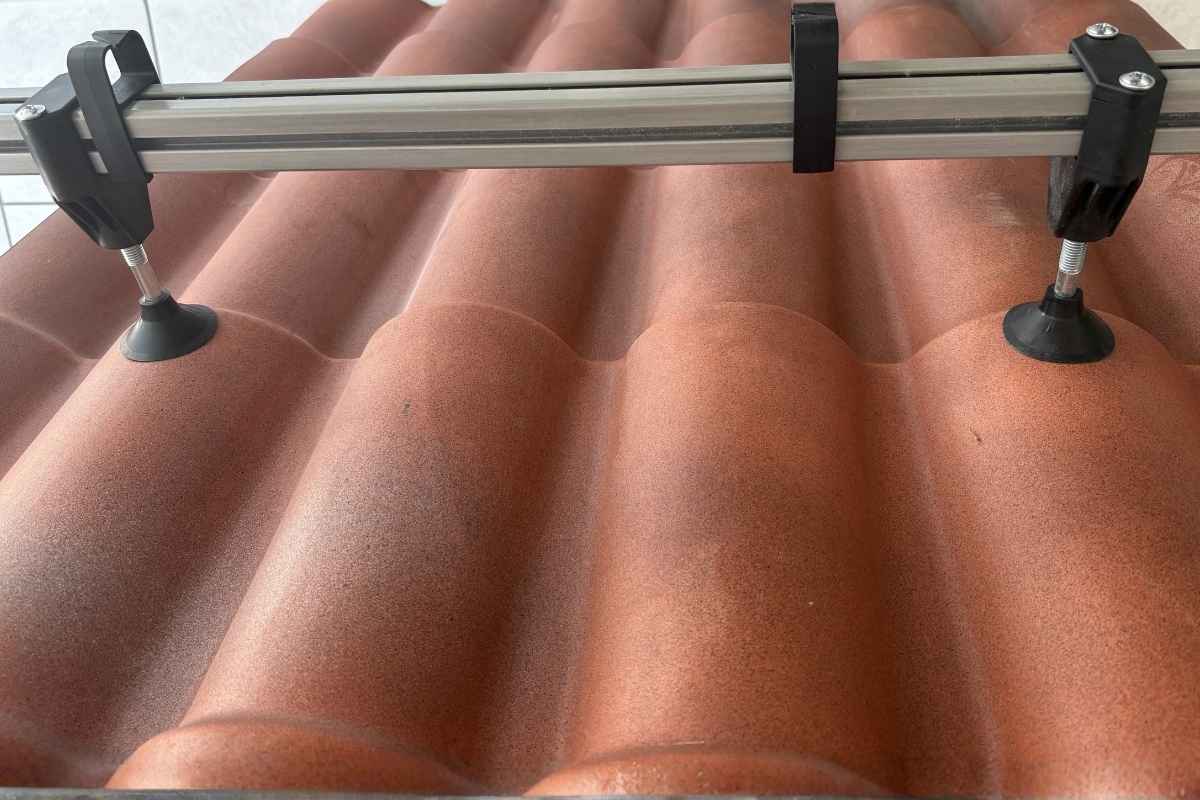
For installations on clay and concrete tiles, Nexus offers the stainless steel Model G bracket, a solution designed for fixing solar panels on roofs with traditional coverings.
Made of stainless steel, the bracket is designed to provide a durable solution suitable for use in domestic photovoltaic systems. The material is particularly important for a component installed outdoors, where the system is constantly exposed to weather conditions and environmental factors.
The Model G bracket is designed to be used on roofs with clay or concrete tiles and forms part of an installation system that creates an anchoring point for the panel structure.
For a complete and functional solution, Nexus recommends using the bracket together with the Nexus plastic profile. The integration of the different components makes it possible to create a coordinated system for supporting and fixing photovoltaic modules to the roof.
The possibility of combining the bracket with a dedicated profile makes this solution particularly suitable for domestic photovoltaic systems where installation is required on roofs with clay or concrete tiles, while maintaining a design approach that takes the existing structure into account.
As with any installation system, the choice of bracket must be made by considering the specific characteristics of the roof and the photovoltaic project. Proper design of the fixing system is essential to ensure a stable and long-lasting installation.
Screw for fixing solar panels on tiled roofs
Another solution offered by Nexus for roofs with clay and concrete tiles is the Screw, identified by product code ISFIXSP1. This is a support component designed for use in installation systems dedicated to fixing photovoltaic panels.
The Screw represents an option to consider when designing a solar panel fixing system for roofs with traditional coverings. The choice between different systems depends on the specific characteristics of the building, the roof structure, and the planned installation method.
When working on a tiled roof, there is no single solution that is suitable for every situation. The geometry of the roof, the type of covering, the position of the panels, and the supporting structure are all factors that must be assessed to identify the most suitable system.
The availability of different solutions for fixing solar panels on roof tiles therefore makes it possible to approach different projects with greater flexibility. The aim is to create a support system that guarantees stability and reliability while integrating correctly with the roof covering.
In this context, the choice of the fixing system is just as important as the selection of the panels themselves. An efficient photovoltaic system must be supported by a properly designed structure capable of keeping the modules in the correct position and withstanding the stresses to which the roof is exposed.
FAQ - Solar panel fixing on roof tiles
- How are solar panels fixed to roof tiles?
Fixing solar panels to roof tiles requires specific support and anchoring systems selected according to the type of roof covering and the roof structure. Nexus solutions include the stainless steel Model G bracket and the Screw. - Is it possible to install a photovoltaic system on a roof with clay tiles?
Yes, it is possible to install a photovoltaic system on roofs with clay tiles using fixing systems specifically designed for this type of covering. It is important to assess the characteristics of the roof beforehand and choose compatible supports. - Which system should be chosen for fixing solar panels on roof tiles?
The choice depends on the characteristics of the roof covering, the supporting structure, and the configuration of the photovoltaic system. The Nexus Model G bracket and Screw are two solutions to consider according to the specific project requirements. - Is the Model G bracket suitable for domestic photovoltaic systems?
Yes, the stainless steel Model G bracket is suitable for domestic photovoltaic systems installed on roofs with clay or concrete tiles. Nexus recommends using it together with its plastic profile. - Why is it important to choose a suitable fixing system?
A properly designed system helps ensure panel stability and preserve the integrity of the roof covering, taking into account environmental stresses and the specific characteristics of the roof. - Who should install solar panel fixing systems?
The design and installation should be entrusted to qualified professionals who can assess the roof structure, verify component compatibility, and install the system in accordance with technical specifications and applicable regulations.
Fixing solar panels on roof tiles requires careful planning and the selection of components suited to the characteristics of the roof covering. When installing a photovoltaic system on a roof, using systems designed to work with clay and concrete tiles makes it possible to focus more closely on system stability and integration with the existing roof structure.
With the stainless steel Model G bracket and Screw, Nexus offers solutions specifically designed for installations on roofs with clay and concrete tiles, developed to meet different project requirements. The most suitable system should be selected based on the characteristics of the roof and the configuration of the photovoltaic system, creating a stable, functional, and long-lasting solar installation on tiled roofs.