Within an efficient drainage system, every component contributes to the correct operation of the installation. Pipes, grates, covers and collection points must work together to ensure proper water flow and simple management of inspection and maintenance activities.
Among the most important elements are inspection chambers, components designed to provide direct access to drainage and discharge networks, allowing periodic checks, cleaning operations and maintenance activities without compromising the structure of the system.
Used in civil, industrial and infrastructure applications, inspection chambers represent an essential technical solution to improve the efficiency of sewer networks and water collection systems. The choice of material, dimensions and matching accessories directly affects the durability and reliability of the entire system.
For this reason, solutions made with innovative materials such as reinforced polypropylene represent today a valid alternative for those looking for resistant, lightweight and easy-to-install products.
What are inspection chambers and what is their function
An inspection chamber is a technical component installed along a drainage or discharge network with the purpose of creating an easily accessible access point. Its main function is to allow pipe inspections, facilitating maintenance operations and making it possible to monitor the condition of the system over time.
In drainage systems and sewer networks, inspection chambers for sewer systems play a strategic role because they help maintain system efficiency, reducing issues related to possible blockages or material accumulation. Properly designed inspection points allow faster and more targeted interventions, avoiding invasive work and simplifying system management.
A well-designed drainage system must not only consider the capacity for water collection and disposal, but also the possibility of carrying out inspections and maintenance over the years. In this context, inspection chambers become a fundamental element for ensuring operational continuity and longer network life.
Polypropylene inspection chambers: lightweight, resistant and durable
In recent years, polypropylene has become one of the most widely used materials for the production of drainage components thanks to its technical characteristics. Polypropylene inspection chambers offer an excellent balance between lightweight construction, strength and ease of installation.
Compared to more traditional solutions, PP allows the production of components that are easy to handle during installation, while maintaining high mechanical resistance and good long-term stability.
Nexus inspection chambers are made of PP reinforced with mineral fillers, a solution designed to increase strength and performance even under intensive operating conditions. This technology makes it possible to obtain reliable products for different applications, both in civil and industrial environments.
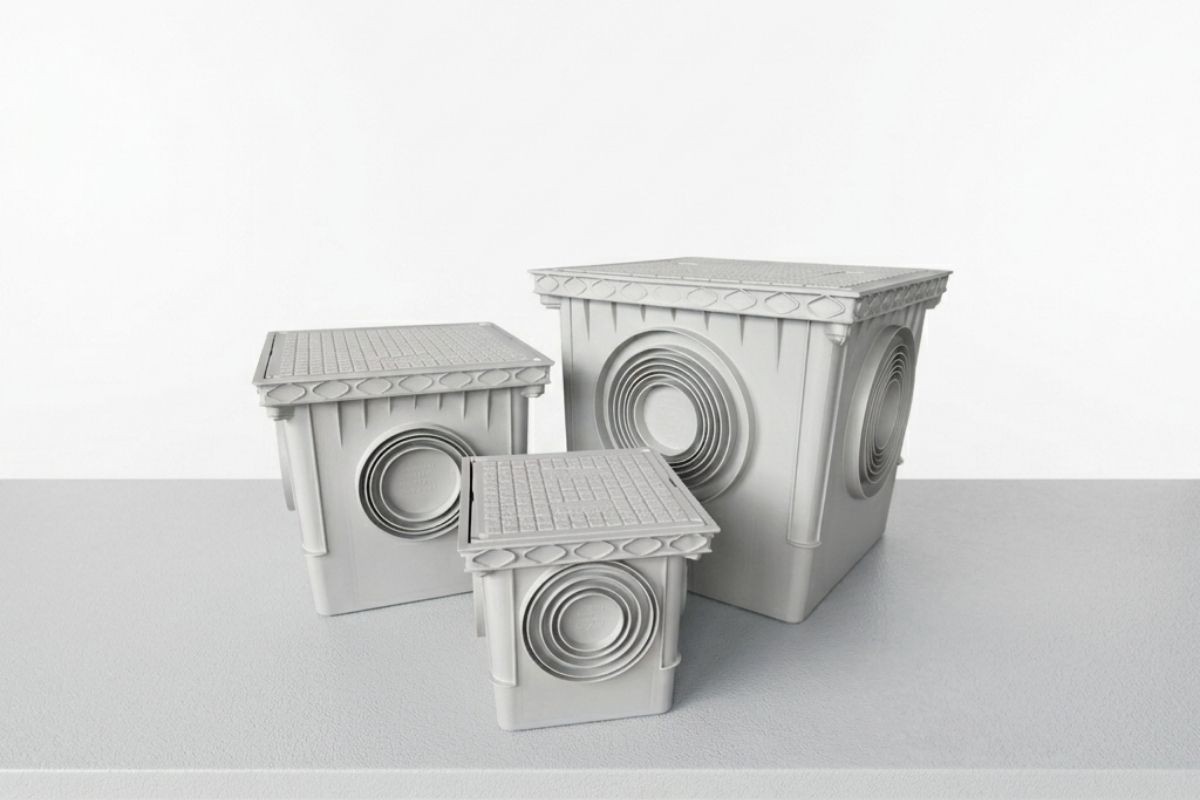
An example is the standard inspection chamber with dimensions of 300x300 mm and a weight of 0.791 kg, featuring a resistant structure that is simple to install and handle on site.
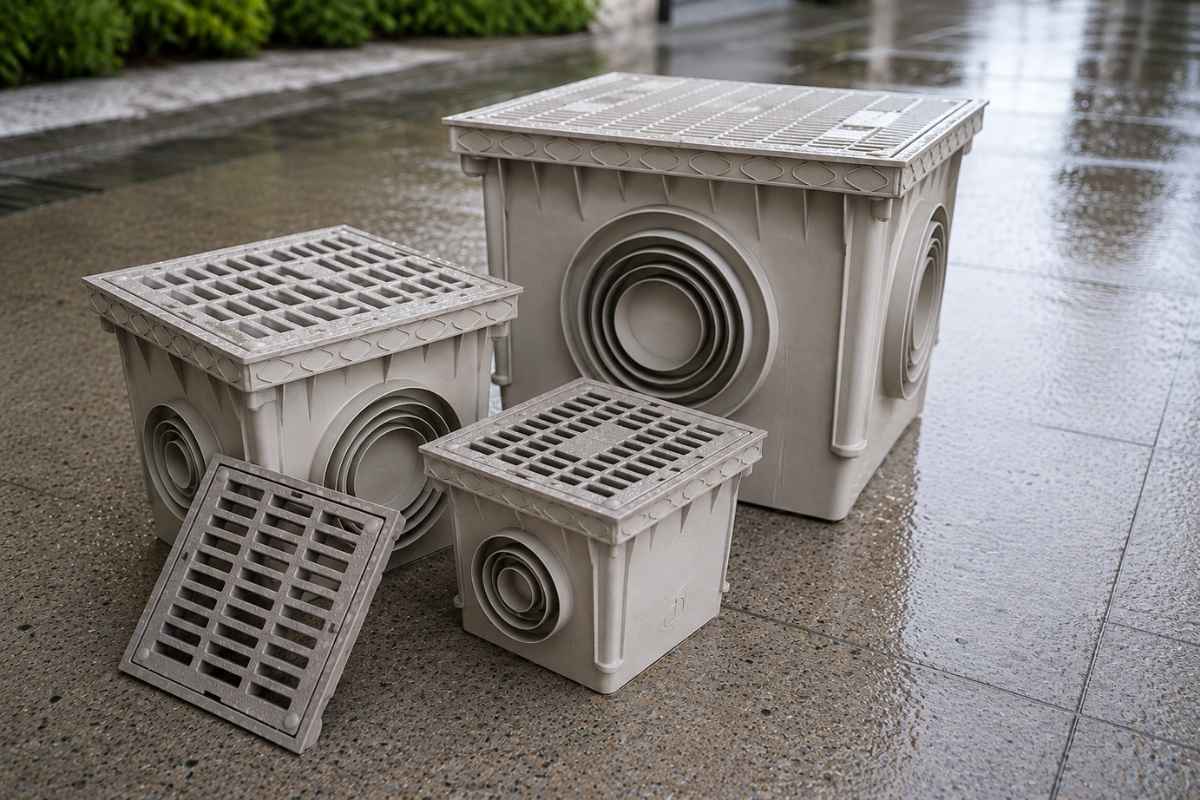
The availability of different sizes also makes it possible to choose the most suitable product according to project requirements. A diversified range allows the system to be adapted to different drainage and water collection configurations.
Applications of inspection chambers: sewers, drainage and water collection
Sewer inspection chambers are used in many contexts where it is necessary to correctly manage water flow and provide access points within the network.
In civil applications, they are used for drainage systems and discharge networks serving residential buildings, public facilities and urban areas. In industrial environments, they represent an important solution for more complex systems where reliability and ease of maintenance are essential requirements.
An inspection chamber for sewer systems must be designed to ensure resistance to mechanical stress, compatibility with connected pipes and easy access. For this reason, it is essential to choose products made with suitable materials and designed for professional use.
Inspection chambers are also integrated with other drainage system components, such as grates and covers. The correct combination with an inspection chamber cover protects the access point while maintaining safety, functionality and ease of intervention.
The design of a complete system therefore allows more efficient water management, improving installation performance and reducing the need for extraordinary maintenance operations.
How to choose a professional inspection chamber
The choice of an inspection chamber should not be based only on dimensions, but must also consider several technical aspects related to the final application.
The main elements to evaluate include:
- quality and resistance of the material;
- compatibility with pipes and accessories;
- ease of installation;
- correct sizing according to the system;
- possibility of access for maintenance and inspections.
A reliable product must guarantee consistent performance over time, especially when installed in systems continuously used for water collection and management. Choosing a PP inspection chamber provides a practical and resistant solution, suitable for multiple applications and able to meet the needs of industry professionals.
Nexus offers a range of inspection chambers designed to provide reliability, durability and ease of use, with different configurations available to meet drainage system requirements.
FAQ about inspection chambers
- What are inspection chambers used for?
Inspection chambers create access points in drainage and discharge networks, allowing inspections, maintenance and interventions on pipelines. - What is the difference between an inspection chamber and a rainwater chamber?
An inspection chamber is mainly designed to allow network inspection and maintenance, while a rainwater chamber is primarily used in systems dedicated to collecting rainwater. - Why choose polypropylene inspection chambers?
Polypropylene inspection chambers are lightweight, resistant and durable. The material simplifies handling and installation while maintaining good mechanical properties over time. - Can inspection chambers be used in sewer networks?
Yes, inspection chambers for sewer systems are designed to facilitate sewer network management and allow inspection and maintenance operations. - What sizes are available for inspection chambers?
Sizes vary according to project requirements and system specifications. Different dimensions are available to suit different drainage configurations. - How do you choose the right cover for an inspection chamber?
The inspection chamber cover must be compatible with the installed structure and ensure protection, stability and easy access to the inspection point. - Do inspection chambers require maintenance?
Maintenance depends on the type of system and operating conditions, but the presence of an inspection chamber makes inspection and intervention operations easier. - Where are inspection chambers mainly used?
They are used in civil and industrial systems, sewer networks, drainage installations and applications where water flow management and monitoring are required.